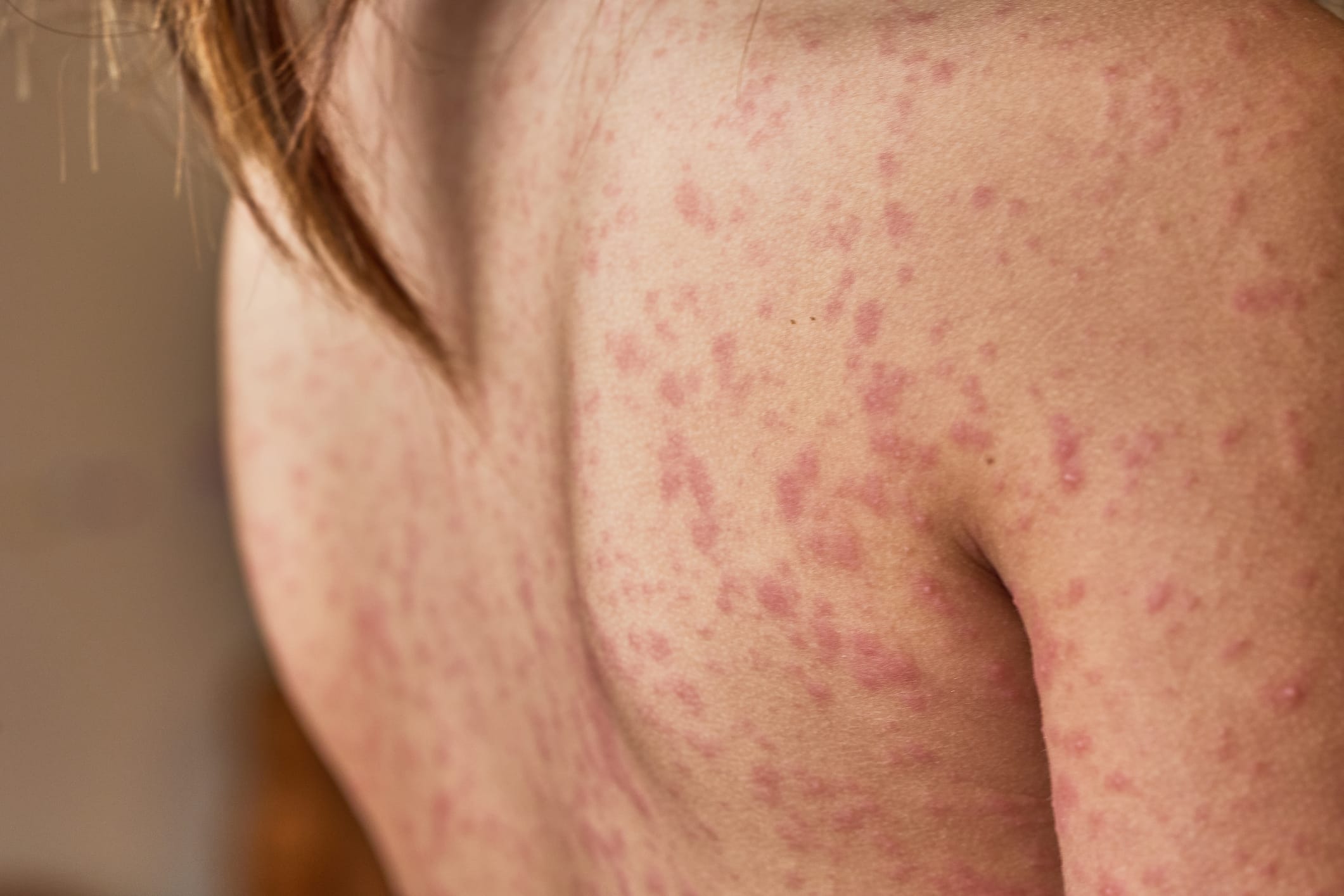
Skin lesions are one of the most common symptoms of systemic mastocytosis (SM), but their form and severity can vary. Between the physical discomfort they cause and the embarrassment patients may feel about their appearance, skin lesions can significantly affect quality of life in people living with SM. Thankfully, there’s ways to avoid them: understanding individual triggers can help avoid the onset of skin lesions, and medical treatment can help alleviate their impact.
How do skin lesions occur in SM?
In SM, mast cells build up in the skin in abnormal quantities. Stimuli can trigger these mast cells to release histamineHistamine A chemical released by mast cells when they are activated. Histamine causes many of the allergy-type symptoms in mastocytosis, including flushing, itching and hives., tryptaseTryptase A protein enzyme that is primarily produced by mast cells and stored in small pockets within the cells, known as granules. High levels of tryptase are a key indicator of SM. and prostaglandins into the bloodstream. This causes an allergic reaction.
Symptom triggers vary greatly from person to person. Common triggers include certain foods (especially shellfish, aged cheeses and spicy foods), alcohol, emotional stress, physical exertion, sudden changes in temperature, overheating, sun exposure, systemic infections and some medications.
How is skin impacted by SM?
SM symptoms can vary from person to person. The following skin irritations are reported as some of the most common:
Flushing: Sudden redness that occurs on the face, neck and chest.
Itchiness: An itchy rash of small reddish-brown bumps (called urticaria pigmentosaUrticaria pigmentosa A skin condition marked by itchy, red-to-brown spots, especially on the neck, limbs and torso. It is caused by surplus mast cells and occurs in up to 85% of patients with SM.) can occur on the torso, thighs and arms.
Hives: Itchy, raised welts on the skin that are either red or skin-colored. Heat or pressure on the skin can cause hives to worsen.
Darier’s sign: In this reaction, lesions become red, inflamed and itchy shortly after they are rubbed or scratched. In undiagnosed patients, Darier’s sign often prompts healthcare providers to consider testing for SM.
Treating skin lesions in systemic mastocytosisMastocytosis Rare disease caused by the buildup of mast cells. Cutaneous mastocytosis primarily affects the skin and is more common in children, while systemic mastocytosis affects internal organs and is more common in adults.
The effective treatment of skin lesions in SM requires H1 and H2 antihistaminesAntihistamines Medications that block the effects of histamine, the chemical found in mast cells that is responsible for many of the symptoms of SM, as well as many allergic reactions. as well as mast cellMast cell A type of white blood cell produced in the bone marrow. They help defend against infections and play a key role in allergic reactions. In SM, mast cells become overactive and build up throughout the body. stabilizers such as cromolyn sodium to reduce itching and flushing. Topical treatments such as corticosteroid cream can help ease inflammation by reducing the number of mast cells responsible for the release of histamine.
Despite treatment and lifestyle modifications, skin lesions might linger. The use of mild cleansers and hydrating creams can help soothe irritated skin. Loose-fitting, breathable clothing will help protect your skin, and avoiding scratching or irritating your lesions will only help their recovery.
Stressing about your skin’s appearance will not help: stress is a common symptom triggerSymptom trigger The symptoms of SM may become worse when certain triggers activate mast cells. Common symptom triggers in SM include exercise, insect bites, stress, scented products, alcohol and spicy foods., so try to let go of any anxiety you feel.
Living with SM often means the lifelong management of many symptoms, including skin irritation. Avoiding triggers, making adjustments to diet and lifestyle and taking care of your skin if irritations erupt are the best ways to help your skin look and feel its best.
Sign up here to get the latest news, perspectives, and information about SM sent directly to your inbox. Registration is free and only takes a minute.