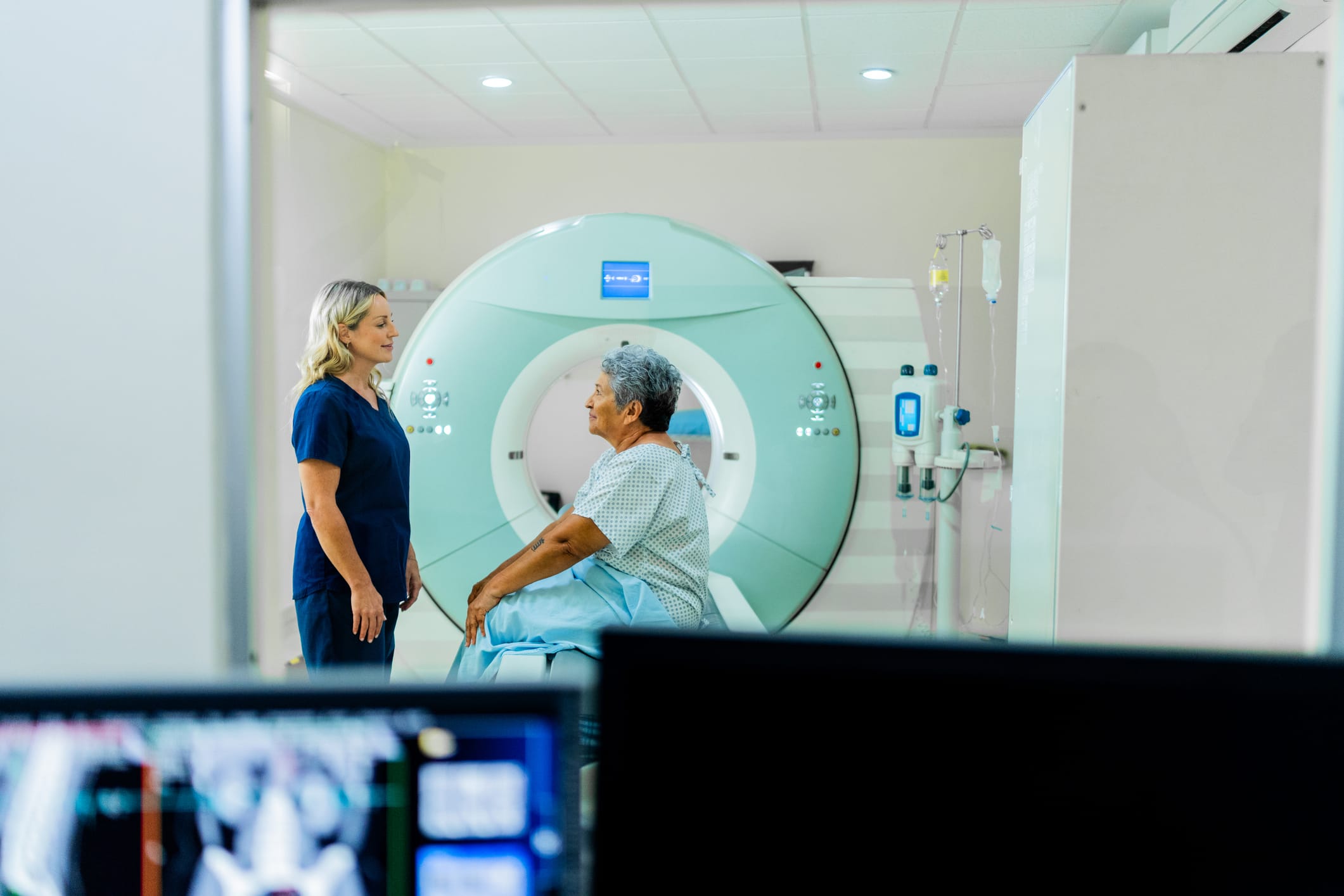
From blood tests to bone marrow biopsies, genetic testing and DEXA scans, the diagnosis and monitoring of systemic mastocytosis (SM) often means extensive testing. A computed tomography (CT) scan is an imaging test you may need multiple times in your SM journey. Understanding what a CT scan looks for and what to expect can make your appointment easier.
What is a CT scan?
A CT scan (also called a CAT scan) combines X-rays with computer processing to create detailed 3D images of the inside of your body. A CT scanner is a large machine shaped like a doughnut; during the scan, you’ll lie on a table as the machine moves around you. A CT scan is painless and only takes a few minutes, though getting ready for the scan will take longer.
Many patients confuse a CT scan and and magnetic resonance imaging (MRI), but these are different tests. An MRI uses a magnetic field and radio waves instead of X-rays, and is shaped like a closed tube. CT scans are better for looking at the body’s structures, while MRIs are better at differentiating soft tissues.
What does a CT scan check for in SM?
A CT scan can be used both to diagnose and monitor SM. In both cases, a CT scan looks for the effects of mast cellMast cell A type of white blood cell produced in the bone marrow. They help defend against infections and play a key role in allergic reactions. In SM, mast cells become overactive and build up throughout the body. infiltration.
Your doctor may order a CT scan to look for:
- Organ enlargement, such as an enlarged liver or spleen, one of many signs used to diagnose SM.
- Enlarged lymph nodes, which can also be a sign of SM.
- Lesions on bones, which are seen in 90% of SM cases.
- Signs of osteoporosis, a common comorbidity in SM that needs regular monitoring.
Read more about SM testing and diagnosis
What to expect during a CT scan
Preparing for the scan
When preparing for your appointment, closely follow the instructions you receive from your healthcare team. These may include fasting for two to four hours and adjusting your medication schedule.
Before the scan, you’ll also need to complete a health questionnaire and remove all jewelry and metal objects. In most cases, you’ll be given a hospital gown to wear.
It is important to note that the contrast dye used in CT scans to improve image clarity may cause mast cell activationMast cell activation Describes when mast cells release histamine and other mediators into the blood stream in response to an allergen or other trigger. This leads to symptoms like fatigue, rash and, in severe cases, anaphylaxis.. Your doctor will either perform the scan without the contrast or prescribe pre-medication such as antihistaminesAntihistamines Medications that block the effects of histamine, the chemical found in mast cells that is responsible for many of the symptoms of SM, as well as many allergic reactions. to reduce the risk of mast cell activity and/or corticosteroids to reduce inflammation.
There is no need to feel anxious prior to your appointment; a CT scan is painless.
During your appointment
You’ll be asked to lie on your back on the CT scanner table. If your scan requires contrast dye, it’ll be injected into your arm, briefly giving you a warm feeling and possibly a metallic taste in your mouth.
The table will move inside the ring-shaped CT machine and you’ll hear a whirring, clicking sound as it takes images. You will need to stay very still, and you may be asked to hold your breath.
After your appointment
Once the CT scan is finished, you will be asked to get dressed and wait for the report, or it may be shared directly with your doctor. You shouldn’t have any lasting effects from the scan. If contrast dye was used, this is easily flushed from your system by drinking water.
Your doctor will explain the results of your CT scan at your next appointment.
Sign up here to get the latest news, perspectives, and information about SM sent directly to your inbox. Registration is free and only takes a minute.