
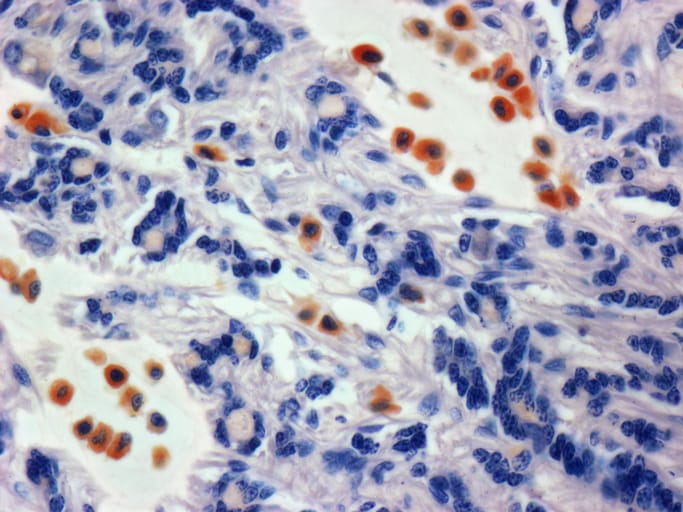
Mast cellMast cell A type of white blood cell produced in the bone marrow. They help defend against infections and play a key role in allergic reactions. In SM, mast cells become overactive and build up throughout the body. disorders such as systemic mastocytosis (SM) are caused by the abnormal activation of mast cells. Mast cells are a type of immune cell that can be classified into two distinct diseases, those that are clonal and those that are nonclonal.
The difference is primarily about what drives the disease, which affects treatment.
What is SM?
Systemic mastocytosis (SM) is a rare hematological disease characterized by mast cells that are overactive and accumulate in different parts of the body such as the bone marrow, liver, spleen, gastrointestinal tract and lymph nodes.
Clonal mast cell diseases
Clonal mast cell disorders are characterized by clones; they originate from a single diseased mutated cell, which through the clonal process results in a large number of identical mast cells with the same dysfunction.
Read more about SM signs and symptoms
SM is one of the more well-known examples of a clonal mast cell diseaseMast cell disease A group of conditions in which mast cells behave abnormally by building up in excess, releasing chemicals too easily or both. Includes mastocytosis, mast cell activation syndrome and hereditary alpha-tryptasemia.. In SM, diseased mast cells proliferate and accumulate in tissues across the body, which can cause problems in the infiltrated organs. It can affect organs such as the spleen, the bone marrow and the gastrointestinal tract.
The various subcategories of SM differ in severity and disease course. Specific genetic mutations are associated with SM, such as the D816V mutation.
Clinicans diagnose SM in part by doing bloodwork and a bone marrow biopsyBone marrow biopsy A procedure to collect a sample of bone marrow using a needle. Often used to examine the characteristics of mast cells and diagnose SM.. Treatment is heavily influenced by the extent to which the disease manifests in an individual.
Nonclonal mast cell diseases
In nonclonal mast cell diseases, a single dysfunctional mast cell does not proliferate into other such cells. Rather, otherwise normal mast cells are triggered to release chemicals in an abnormal manner. That results in disease characteristics such as itching, flushing or dizziness.
Scientists still do not fully understand what causes otherwise normal mast cells to behave in an abnormal way.
In diagnosing a nonclonal mast cell disease, doctors typically rule out SM if a patient has symptoms typical of a mast cell disease. That includes a bone marrow examination even if laboratory tests may show dysfunction.
Treatment of a nonclonal mast cell disorder focuses on blocking mast cell mediators. Treatments may include histamineHistamine A chemical released by mast cells when they are activated. Histamine causes many of the allergy-type symptoms in mastocytosis, including flushing, itching and hives. blockers or mast cell membrane stabilizing agents.
Doctors may also prescribe pain medication if pain is a significant issue. Omalizumab, a monoclonal antibody, may be effective in some patients with mast cell activationMast cell activation Describes when mast cells release histamine and other mediators into the blood stream in response to an allergen or other trigger. This leads to symptoms like fatigue, rash and, in severe cases, anaphylaxis. who do not respond adequately to other therapies.
Seeing a doctor
If you have symptoms of mast cell activation, you should see a doctor as soon as possible.
Your doctor’s first responsibility is figuring out whether your mast cell disease is clonal or nonclonal. He or she may order specific tests to determine what subtype of disease you have.
Once your doctor is confident of a diagnosis, he or she will prescribe medications aimed at controlling your symptoms and ensuring that you gain a measure of relief and are able to function daily with as little disruption as possible.
Sign up here to get the latest news, perspectives and information about SM sent directly to your inbox. Registration is free and only takes a minute.


