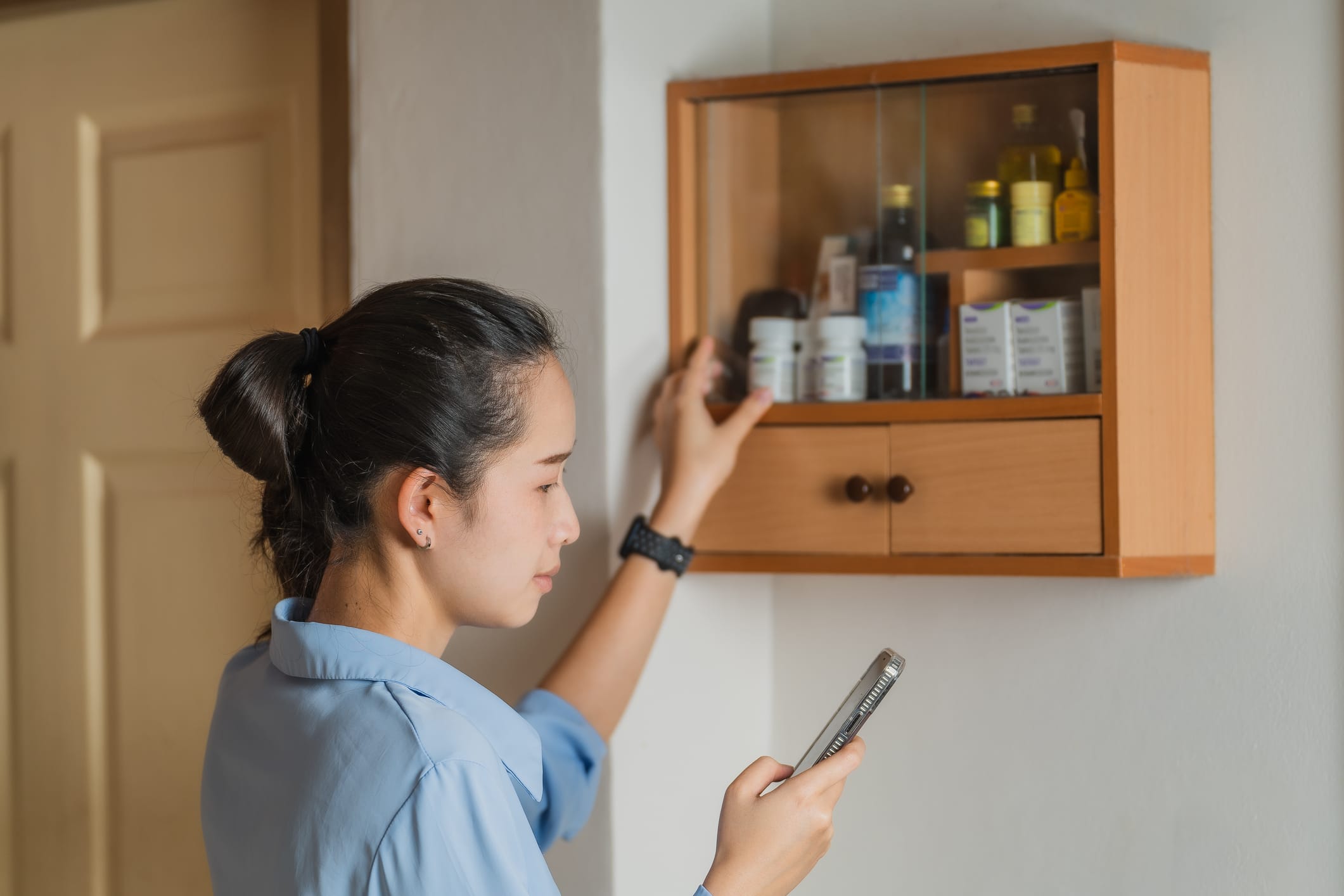
Medications for systemic mastocytosis (SM) are an important part of managing symptoms and slowing disease progression. But to work their best, they need to be taken as prescribed and stored correctly. Here’s a quick guide to the basics of organizing and storing your medications.
The basics of storing oral medications
Many of the medications used to treat SM (including indolent SM, the most common type) come in the form of pills or tablets. Oral medications used to treat SM include antihistamines, oral cromolyn, avapritinib and midostaurin.
With any prescription, you should always check the medications’ specific storage instructions; these typically come in a leaflet with your medication. It is important that you follow all the instructions, as every medication is different.
Generally speaking, though, oral medications should usually be stored at room temperature. You can carry them along with you in a bag or place them in a part of the house where you won’t forget to take them. Many won’t be impacted by briefly being either slightly above or below room temperature range (but again, check the instructions). However, most medications shouldn’t be left in a hot car all day, in the freezer, or at other extreme temps.
Read more about SM therapies
Organizing your medications
Some people find it helpful to buy a pill storage box that has the days of the week on it, to help avoid skipping a day. This may be especially helpful if you experience brain fog or fatigue, common symptoms of SM.
If you take your medications out of their original containers, make sure you don’t lose track of which is which. Taking any medication more often than prescribed can be dangerous, and cause serious side effects.
Also ensure that your medications are placed in a location that isn’t easily accessible to a child or a pet. While a pill organizer on a countertop may work fine for some patients, others might need to use child-proof bottles on a high shelf.
Keep your EpiPen in reach
It’s generally recommended that people with SM carry at least one epinephrine autoinjector with them at all times. An EpiPen is meant for emergency relief during an allergic reaction. Because it is an emergency medication, you must treat it as such; wherever you are, one should always be on standby.
As with oral medications, storing EpiPens at extreme temperatures can reduce how well they work; room temperature is best. Air and light can also impact the medication, so keep your EpiPen in the carton it came with.
Since you may not need an EpiPen often, it’s also important to keep an eye on the expiration date. Most are only good for a year to 18 months.
Emergency kits
Many people with SM have an emergency medical kit where they keep EpiPens and other medications. Emergency kits are a great way of ensuring you never find yourself without your medication, whether you’re at work, running errands or visiting a friend.
General medication storage tips apply to your emergency kit, too: Don’t keep it in a hot car, close to the stove or in reach of a dog that likes to chew. If you’re travelling, keep your emergency kit with you, especially if your luggage will be exposed to extreme temperatures.
Sign up here to get the latest news, perspectives, and information about SM sent directly to your inbox. Registration is free and only takes a minute.