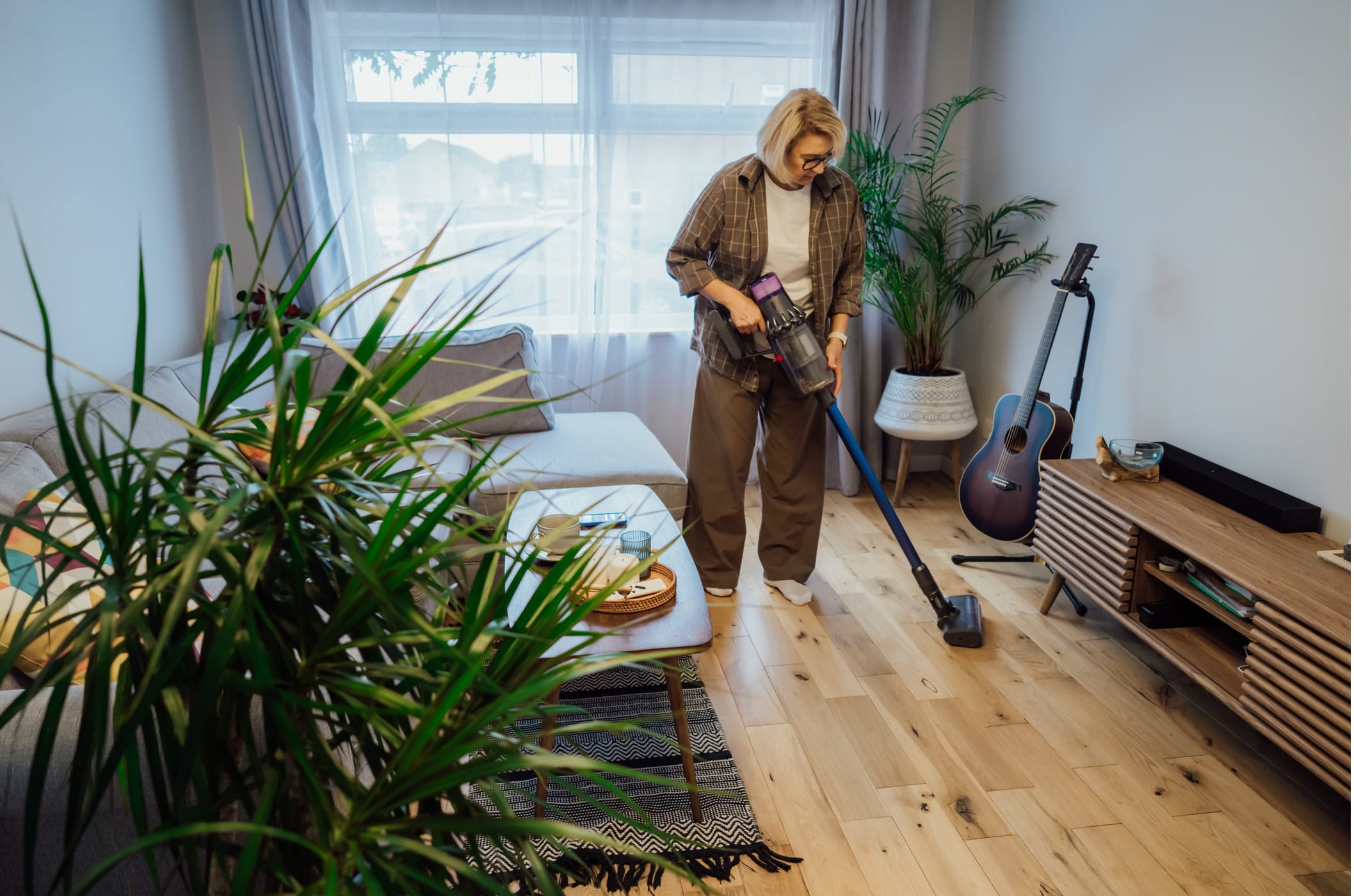
Keeping your house clean can be one of the daily challenges of living with systemic mastocytosis (SM). Symptom episodes can be triggered by mold or dust mites hidden in forgotten corners, by the chemicals in cleaning products and by the physical effort of housekeeping itself.
Whether it’s a weekly tidy or a deep spring clean, it is important to plan ahead. You’ll need to find your own balance to avoid activating mast cells and causing symptoms. These tips can help.
Natural is best
Chemicals and fragrances are a common symptom trigger.
Instead of cleaning products containing harsh chemicals, bleach, ammonia or synthetic fragrances, choose natural options instead. Or make your own: creating your own cleaning products with diluted vinegar, baking soda, salt, lemon juice or other natural solutions can offer good results, and might even be more affordable.
If you prefer to buy cleaning products instead of mixing your own, look for labelling such as “hypoallergenic,” “non-toxic” and “sensitive.”
Prep the environment
To avoid the accumulation of dust, mold, fragrances or chemicals, ensure good airflow in each room. If the outdoor air quality is good, open the window and position a fan.
If overheating triggers your symptoms, turn the thermostat down before you start cleaning to help keep things cool.
Read more about SM FAQs
Pace yourself
Physical exertion is another trigger for SM symptoms, so it is important to break cleaning down into short, manageable tasks. Schedule breaks between each task to allow your heart rate and breathing to stabilize.
Don’t feel tempted to push through, lift heavy items or skip rest breaks. The resulting fatigue and physical strain could add to SM symptoms.
Try to make housecleaning as stress-free as possible, as emotional stress can also play a role in the SM symptom burden.
Protect yourself
Wear gloves to protect your skin from irritation and inflammation from cleaning products or dust mites.
Wear a mask to protect your airways from chemicals or fragrances that may potentially trigger mast cell activity and associated symptoms.
Before cleaning, be sure to have access to antihistamines, epinephrine injections or other medication you use in the event of an allergic reaction. If you notice any symptoms, stop immediately.
Accept help
If you are in a position to share, delegate or outsource cleaning tasks, take the opportunity. It can be hard to find the right balance when cleaning, so having someone else take on the responsibility can be a big relief. Even one big task off your plate, like scrubbing the shower, might make a difference.
Sign up here to get the latest news, perspectives, and information about SM sent directly to your inbox. Registration is free and only takes a minute.