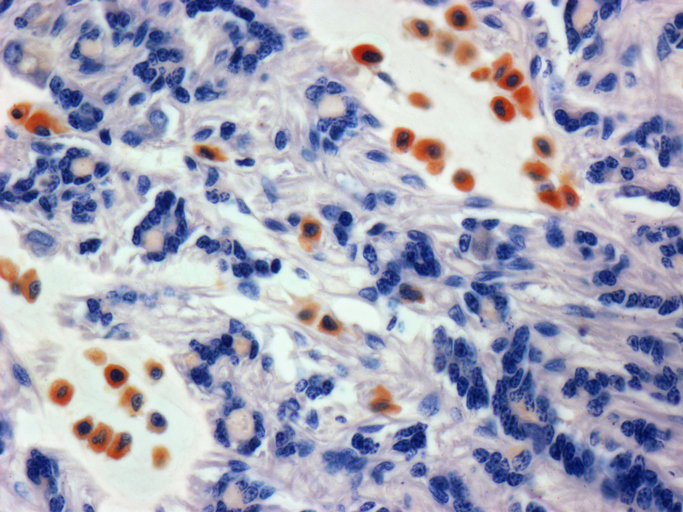
Systemic mastocytosis (SM) occurs when mast cells become overactive and build up throughout the body. But what exactly are mast cells, and how does their overactivation contribute to the symptoms of SM?
What are mast cells?
A mast cell is a type of white blood cell, an essential part of the body’s immune system. They’re made in the bone marrow and are then sent to various tissues. Mast cells are mainly found underneath the skin, surrounding the blood vessels and in the nerves. They’re also located in several organs, including those of the respiratory and gastrointestinal tracts.
Each mast cellMast cell A type of white blood cell produced in the bone marrow. They help defend against infections and play a key role in allergic reactions. In SM, mast cells become overactive and build up throughout the body. holds many granules, which are small sacs that contain and secrete different chemicals. These include:
- Histamines, which are responsible for causing allergic symptoms as well as regulating sleep cycles and memory.
- Heparin, which plays a role in the formation of mast cell granules.
- Cytokines, which are a group of proteins that control inflammation and regulate cell growth.
- Growth factors, which, as their name suggests, manage the growth and division of mast cells.
The activation of mast cells means these granules — and their chemicals — are released. This triggers symptoms like fatigue, rash, pain, nausea and, in severe cases, anaphylaxisAnaphylaxis A severe allergic reaction that can turn fatal without treatment. Patients with SM are at a higher risk of developing anaphylaxis..
When are mast cells activated?
Mast cells can become activated in all individuals. In those without SM, mast cell activation is a much more selective process, only occurring in response to specific triggers such as viruses or bacteria. This serves as a warning system for the body to help the immune system fight off foreign invaders. Individuals with allergies also experience mast cell activationMast cell activation Describes when mast cells release histamine and other mediators into the blood stream in response to an allergen or other trigger. This leads to symptoms like fatigue, rash and, in severe cases, anaphylaxis. when they come into contact with their allergen.
In patients with SM, on the other hand, mast cells are hyperactivated. This often occurs in response to everyday stimuli like foods, alcohol, insect venom, medications, stress and much more. Because these cells are found in so many different tissues, the symptoms of SM can impact nearly every organ system.
Read more about SM causes and risk factors
What is the root cause of mast cell overactivation in SM?
The majority of patients with SM have mutations in the KIT gene. The most common KIT mutation is D816V, where, at the 816th position of the protein, the building block aspartic acid is replaced by valine.
The KIT gene codes for a protein called CD117. CD117 belongs to a large family of proteins called receptor tyrosine kinases, which play key roles in cell signaling. One of CD117’s many responsibilities is regulating the production and movement of mast cells throughout the body.
When the KIT gene becomes mutated, the protein remains stuck in the “on” position. As a result, mast cells are able to proliferate at an abnormally high rate and accumulate in the body.
KIT D816V isn’t the only mutation known to cause SM, though. Upwards of 90% of individuals with advanced SMAdvanced SM In these subtypes of SM, mast cells begin to damage organs. Advanced SM includes the subtypes aggressive SM, mast cell leukemia and SM with an associated hematological neoplasm. have additional mutations in genes including TET2 and SRSF2, which are also linked to mast cell function and survival.
Sign up here to get the latest news, perspectives, and information about SM sent directly to your inbox. Registration is free and only takes a minute.