After a near-fatal and unrecognized anaphylactic shock, I went through a maddening trial of medical trauma. Within those months, I felt that I was losing my mind and I lost trust in myself. I lost confidence in believing how severe my symptoms were, because diagnostic testing found no evidence of severe disease. The only evidence I had was the life-saving measures described within my EMS report and the subsequent recovery in the ICU. What reportedly had saved my life was the IV epinephrine administered by paramedics to treat my cardiovascular collapse (shock).
Through telling my story, I have found that a common misconception about epinephrineEpinephrine Also called adrenaline, this hormone is used in emergency situations to reverse symptoms during a severe allergic reaction (anaphylaxis). is that its primary use is to treat anaphylaxisAnaphylaxis A severe allergic reaction that can turn fatal without treatment. Patients with SM are at a higher risk of developing anaphylaxis.. I have often been asked that if epinephrine was what saved my life, why did doctors not realize I had anaphylaxis?
Other than being the first line of treatment for anaphylaxis, epinephrine is a medication administered for various life-threatening medical conditions. Since I had no obvious signs of anaphylaxis, the epinephrine that stabilized my vitals was seen as a remedy for shock and not as a treatment for anaphylaxis.
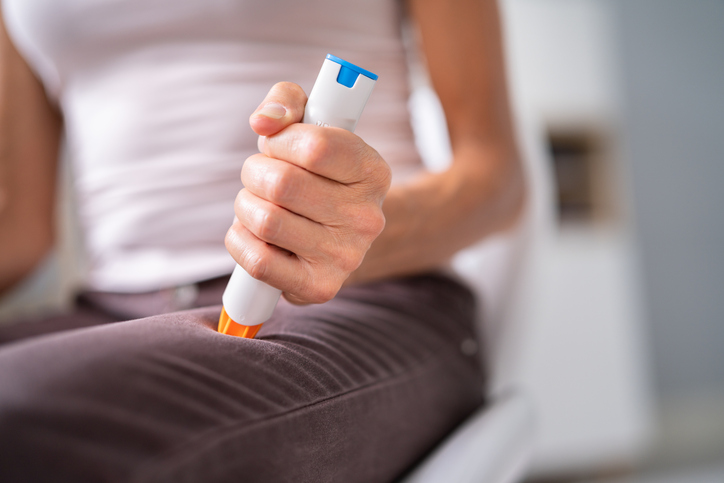
When one condition after another is slowly ruled out and the reason behind symptoms is not found, nearly dying becomes inconsequential — not only to medical professionals, but also in your own mind. Was it really that bad? Maybe it was just a “one off.” I had to keep reminding myself that I had almost died and I needed to know why, so that it didn’t happen again. After being diagnosed with systemic mastocytosis (SM), I now have what I need so that it doesn’t happen again: EpiPens.
The gray area of anaphylaxis
Not all anaphylaxis symptoms present the same or are even obvious; this is why many SM patients will constantly question if they are experiencing a severe reaction. Anaphylaxis is difficult to understand and measure; this why SM patients are constantly gaslighting themselves.
As you can imagine, the uncertainty of your life being threatened on a daily basis is exhausting and stressful.
The most common question I see within support groups is “when should I use my EpiPen?” It seems like a simple question that would have a direct “signs and symptoms” answer, but with SM the answer is far from simple.
Anaphylaxis can look like any of the following symptoms, typically affecting at least two body systems: syncope (fainting), hypotension (low blood pressure), heart palpitations, vomiting, diarrhea, hives, angioedema (swelling below the skin), flushing, puritis (itching) and wheezing. My anaphylaxis symptoms mimicked panic attacks and always presented in the same way: tachycardia (a fast heart rate), flushing and syncope. I have no obvious signs and symptoms of anaphylaxis, such as throat swelling or hives. My symptom presentation is a good example of how the question “when should I use my Epi” can run on a fine line between panic and severe consequence.
Leaving the ER multiple times without answers or evidence left me feeling unhinged. I did not have an EpiPen prescription at this time and was able to recover without epinephrine, so I questioned whether or not I was experiencing anaphylaxis.
I now know that anaphylaxis is somewhat of gray area in the medical community due to its high variability in presentation and treatment. I know that my cardiovascular collapse is an example of anaphylactic shock, but I still do not know for certain if my history of syncope would be considered true anaphylaxis, considering that I recovered without epinephrine. Although my reactions were severe enough to warrant epinephrine, depending on the load the body can sometimes deal with the mediator release. This explains how I was able to recover from mediator-induced syncope without epinephrine. If I had known of my disease then, I would have most certainty administered my EpiPen during those anaphylactoid events because there would be no telling in those moments if I could have recovered without it.
The weight of uncertainty
The uncertainty and unpredictability of life-threatening anaphylaxis is a hard cross to bear with SM. Anyone with a severe allergy that has experienced anaphylaxis can tell you that it is traumatic, causing a hypervigilance to avoid their allergen. Understandably, there is an added layer of fear for SM patients because some triggers are out of their control.
To simplify my experience, I like to describe the fear that I hold as having a peanut allergy when the entire world can throw a peanut at me. It may sound a bit dramatic, but I did get resuscitated for anaphylactic shock without an identified trigger, so I feel like I’ve earned the right.
The point that I am trying to get across is that no SM patient should feel shame or that they “overreacted” for using their EpiPen. The consequences of not administering an EpiPen when it is warranted are death or an anoxic brain injury. I now trust myself more than anyone when it comes to my health, and I think that is the secret to drowning out that little voice that is saying “you’re being dramatic.”
Sign up here to get the latest news, perspectives, and information about SM sent directly to your inbox. Registration is free and only takes a minute.